
¶ Onboarding Structures
¶ Chalmers Aerospace Society for Advanced Rocketry
The Structures team is responsible for the aerodynamic components, such as the fins and nose cone, and their mounting. Additionally we are responsible for the complete design of the rocket compartments above the oxidizer tank, including the recovery system bay, payload bay, and electronics bay. The team is also responsible for ensuring that the necessary cabling for all the parts controlled by the flight computer is properly managed, as well as the ground support equipment for rocket launches and motor testing.
¶ Recovery system
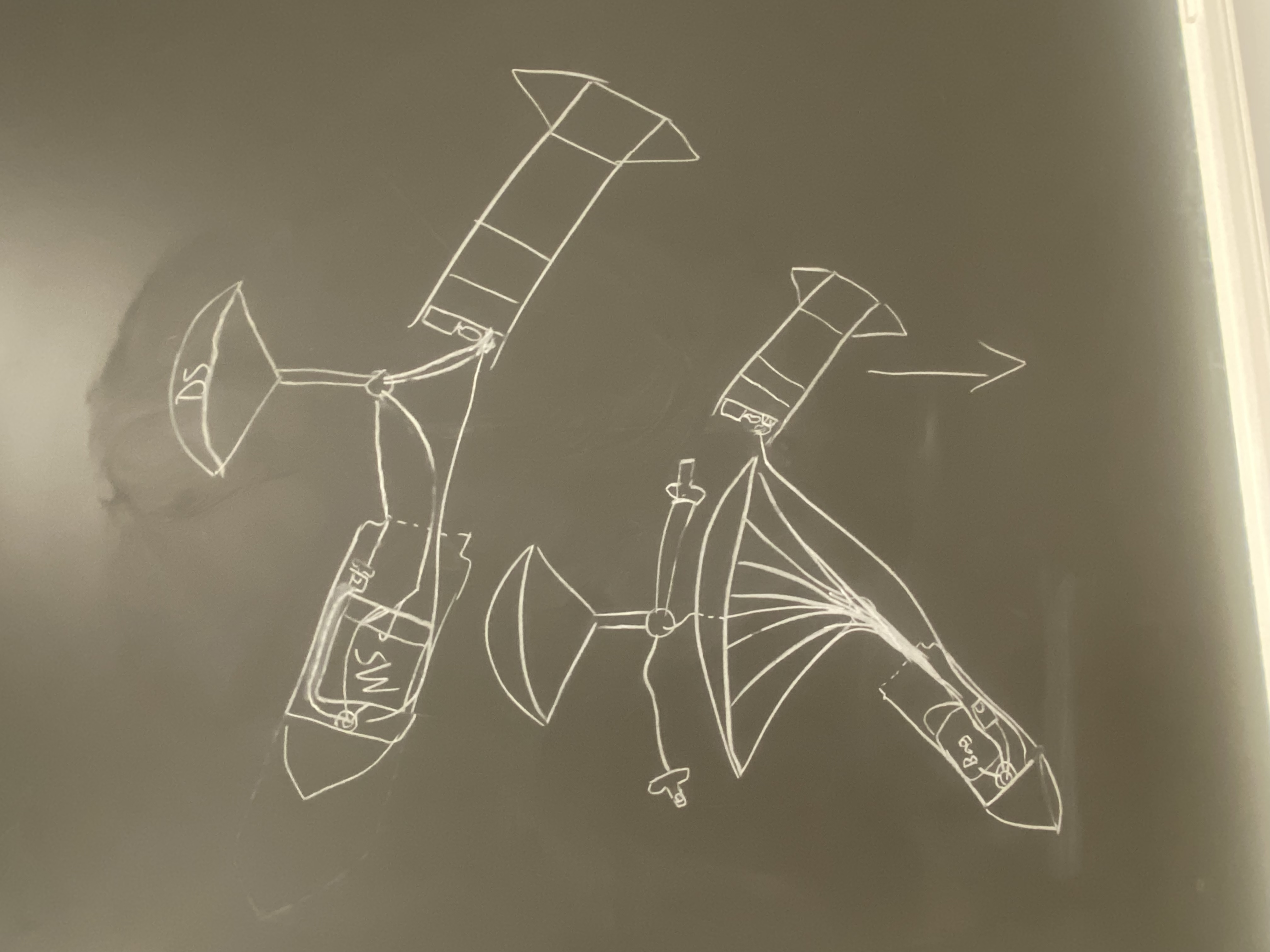
The main focus so far has been the recovery system. Below, you can see a diagram showing all the parts of the recovery system.
The ejection of the parachute starts with a servo motor rotating a cam, which pushes a rod against the head of a refillable CO₂ canister, releasing the gas. The gas then increases the pressure inside the sealed parachute bay, shearing the shear bolts and releasing the drag chute. Part of the mechanism is shown in the picture below.
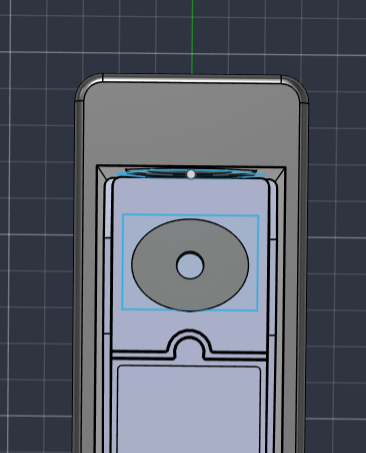
The drag chute is connected to both the main parachute via a longer line and to the top part of the rocket via a shorter line, with a mechanism using a servo motor to be able to separate this line.
When the main parachute is supposed to be released, the shorter line is cut, causing the force of the rocket being carried by the main parachute to pull it out, with the drag chute acting as a drogue.
If you are interested in learning more about the math behind the recovery system or have been assigned to work on it, you can find the documentation here:
¶ Payload
The payload that will be used consists of four PocketSats (cubes with dimensions of 5 × 5 × 5 cm and a mass of 250 g each). The current plan is for these to be dummy weights that are non-deployable. The reason for having these in the rocket is that they are a requirement for EuRoC, which the rocket was originally built for.
¶ Electronics bay
The electronics bay will house the batteries, PCB, and sensors to ensure a safe flight and provide debugging data if something goes wrong. It will need to be RF-transparent to allow wireless communication and should preferably be designed in a way that maximizes the communication range.
It will also need to maintain the same pressure as the freestream to allow for accurate barometric altitude measurements. Additionally, it will need to maintain a safe temperature to ensure that the electronics and batteries are not damaged or adversely affected.
¶ Aerodynamics
The fins should ensure that the rocket has a stability margin between 2 and 3 calibers throughout the entire flight. The nose cone should be optimized to reduce drag (a pointy nose cone is not always better).