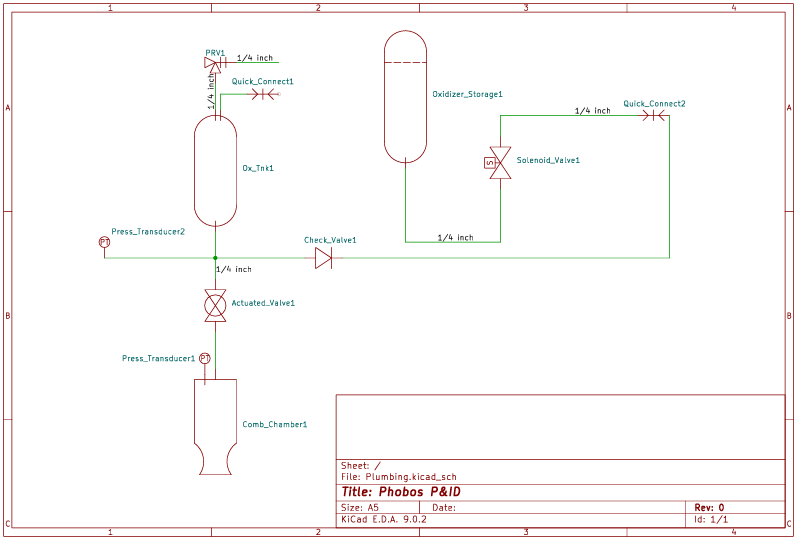
¶ Fluid System
In this section the fluid system inside the rocket is described. The main goal of the fluid system is to transport the oxidizer from the tank into the combustion chamber. Main components the fluid system contains are the following: main oxidizer valve (MOV), pressure sensors, pressure relief valve, quick disconnects and fittings.
¶ Tubing Material Selection
After looking into different material options, there were three that were sufficient to use. The first two options are flexible tubing, which are beneficial since the tolerances might differ and the space is limited which makes it easier to fit into the available space.
Flexible Nylon tubing is one option, which is very cheap and easy to cut to the desired length. However, it is not specifically rated to the pressure that we expect in the system. Generally, the safety factors from the suppliers are pretty high so other teams have used them for an initial design. On the downside, this tubing is prone to bursting under the pressure.
The next option is steel-braided PTFE tubing. The benefit of this tubing is that it is still relatively flexible, while being rated for very high pressures (>100bar). The downside of this tubing is, that it cannot be cut to the desired length and instead has to be ordered in the off-the-shelf length. The length that are offered by suppliers like swagelok are however too long for our applications with the minimum length of 300mm.
The last option is steel tubing, which easily withstands the expected pressure with a large safety margin (rated for >300bar). These tubes can also easily be cut to the desired length with a tube cutter and afterwards bend with a bending tool. This tubing is slighty more expensive and less versatile but was deemed the most suitable for the application. A well known supplier for this kind of tubing is "swagelok" with a large amount of compression fittings for the desired application.
¶ Fittings
Since the tubing was decided to come from swagelok, the fittings also come from the swagelok catalog. The benefit of this is that 3D models exist for all fittings they offer and they fit snug together.
There are a couple of necessary fittings required to build the plumbing system. Firstly, there have to be quick connect fittings for filling the oxidizer tank. This connection will stay on till the launch and then during launch it rips off and releases the rocket with a full tank.
Pressure sensors are used to monitor the pressure drop in the fluid system. Especially important is the pressure loss over the injector plate, which is further described in the injector section. Furthermore one sensor is installed on the combustion chamber to monitor the pressure inside the chamber, which is an important parameter.
In the fluid line from the oxidizer storage tank to the run tank, a check valve is installed. This ensures that no fluid runs from the run tank back into the storage tank.
¶ Actuated Valves
The main oxidizer valve between the oxidizer run tank and the combustion chamber, as well as the fill valve from the storage tank to the run tank are actuated by a simple actuation mechanism. Generally pneumatic and electric actuators take up a lot of space, are expensive and heavy. Therefore, an easy way to open the valve is to use a servo which opens a ball valve and that servo is mounted to a 3D-printed bracket.
¶ Plumbing and Instrumentation Diagram Phobos