¶ Servo-Valve Overview
The purpose of the servo-valve is to remote control of oxidizer flow.
The servo-valve assembly is made from three main elements:
- Valve – the mechanical element that opens/closes to regulate flow
- Servo motor – provides the torque needed to turn the valve
- Connector – mechanically couples the servo output shaft to the valve
¶ Valve
The valve selection process started with identifying the required specification:
- Pressure: Minimum of 60 Bar with safety margin.
- Port size: ¼'' to fit with the rest of the piping.
- Thread Standard: BSPP
- Material: Not reactive with nitrous oxide.
- Usage : Gas/Liquid
- Cost: Cheaper the better
- Type: Ball valve
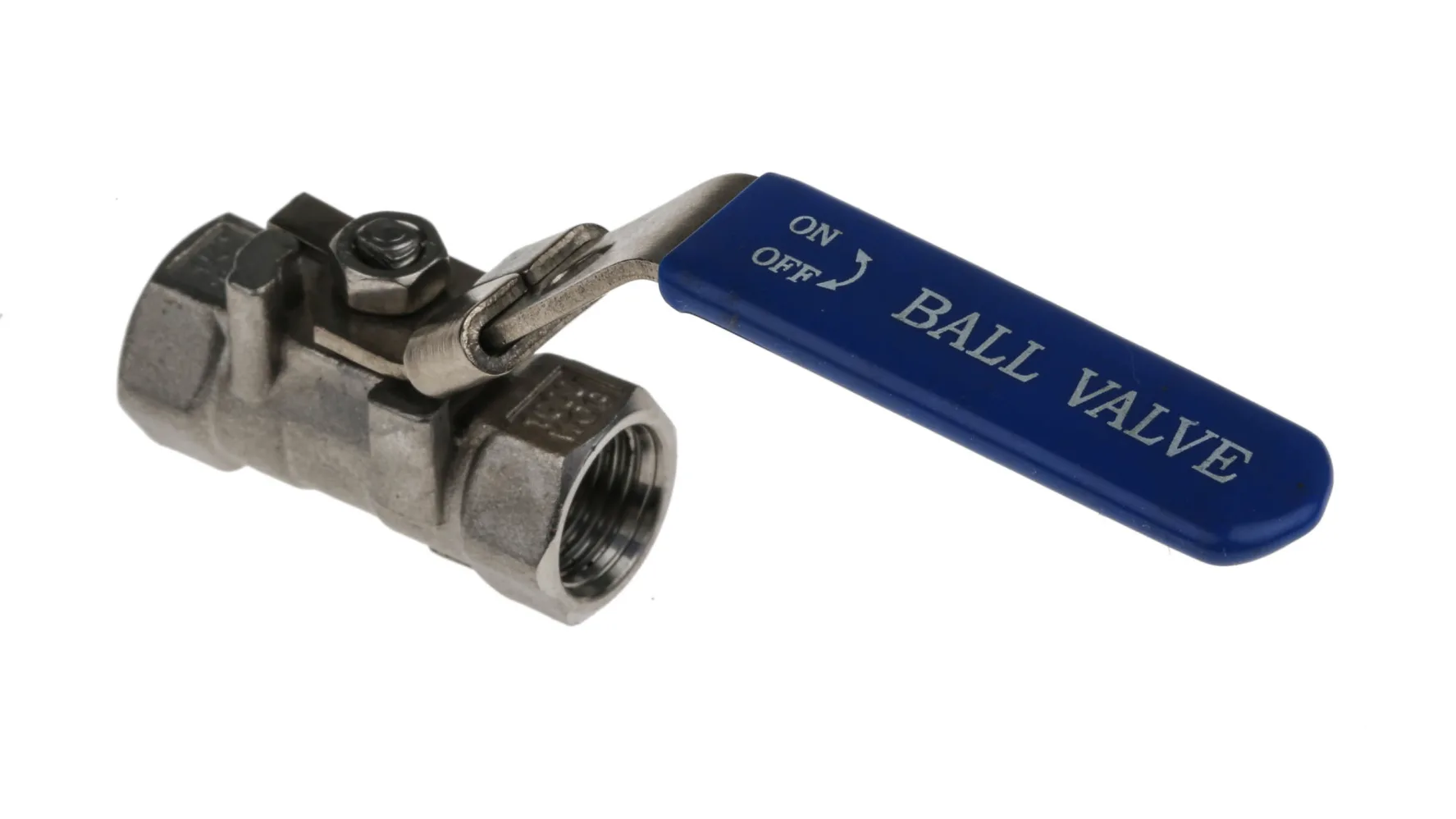
Based on these requirement a number of potential valves were found. The chosen valve ended up being the RS PRO Stainless Steel Reduced Bore, 2 Way, Ball Valve, Threaded, BSPP 1/4in, 68bar Operating Pressure. This specific valve exceeds the pressure requirement and satisfies the compatibility criteria. Being a ball valve makes it easy to operate with a rotary servo. The valve material should not be reactive with nitrous oxide.
¶ Servo
The servo was chosen based on the needed torque to operate the valve. The torque needed operate the valve is 0.8Nm according on the data sheet.
The servo that was chosen is Miuzei Servo 35 kg 270° RC Digital and fulfills the torque.
[Image of servo]
¶ Connector
The first consideration was if the connecter was going to be lever based and increase the potential torque of the motor or if is a one to one connecter where the torque is just directly transferred to valve.
It was decided to design a one to one connector as there are less points of failure an if it turns out the servo is to weak we can use try using a lover based system.
The design itself for the connector was iterative and consisted of trial and error as.
The design as of 2025-12-03 can be seen below.
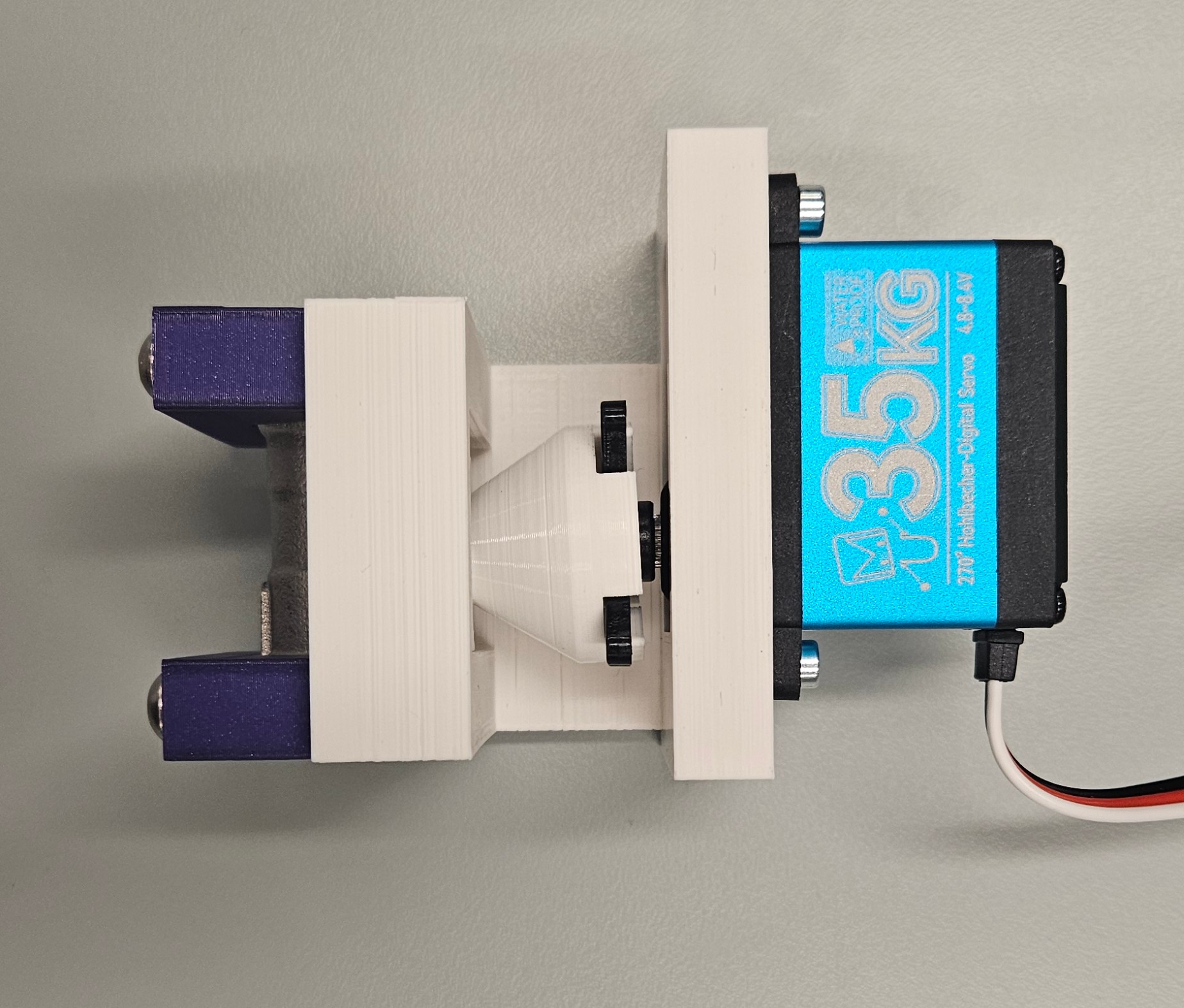
It can and should be made smaller by shortening the connecter putting the servo and valve closer. More support braces can also be added to make it more stable.